BELTS & SILHOUETTES
How to Style an Abien Rhinestone Belt
Let a line of sparkle change the way a familiar outfit comes together.
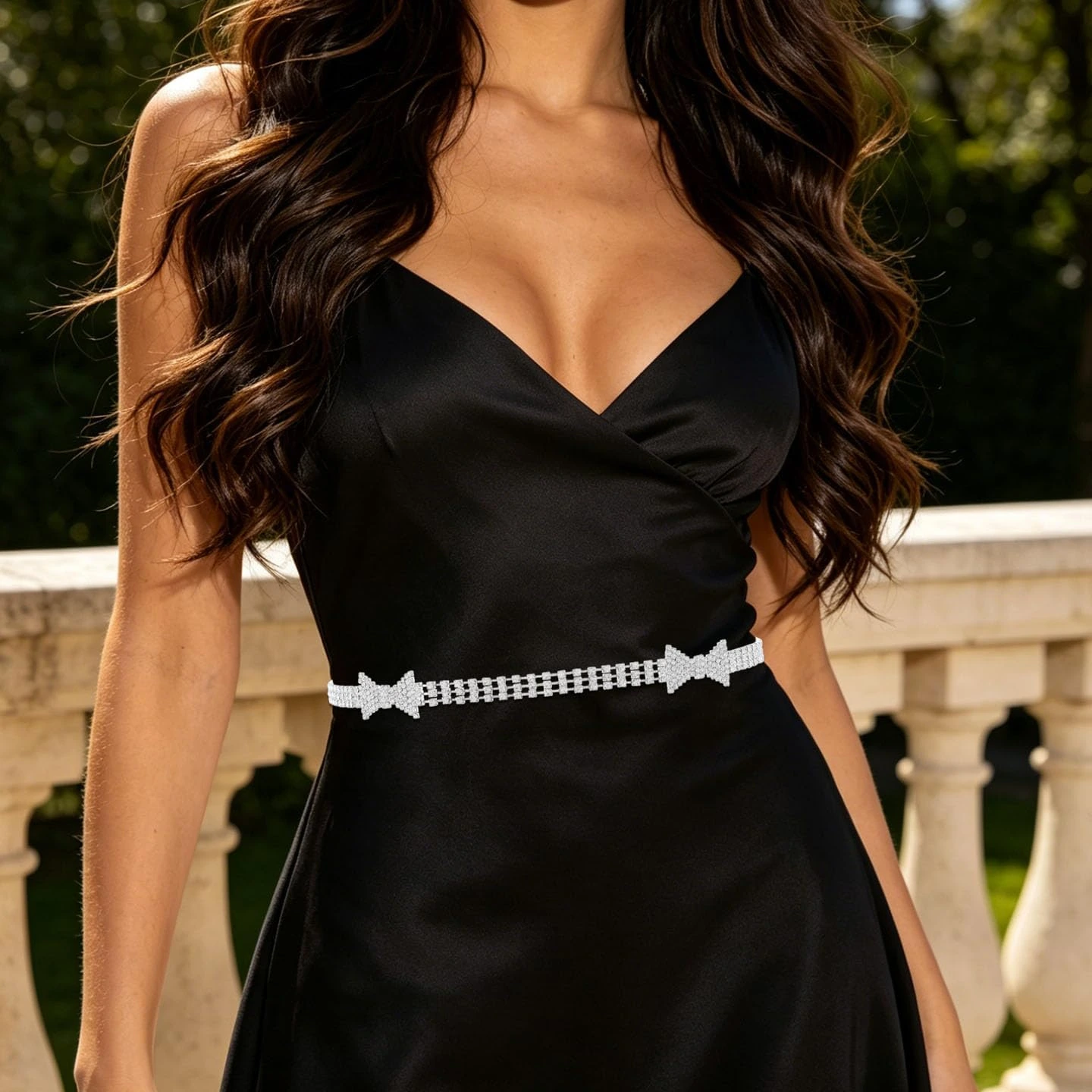
A rhinestone belt can give a familiar outfit a different point of view. The useful question is not whether you are allowed to wear sparkle during the day. It is what you want the belt to do: trace a waistline, add a small decorative motif, or become the main feature of the outfit. Once that role is clear, choosing the shape, placement and surrounding accessories becomes much easier.
This guide takes you from measuring and comparing belt types to three complete outfit approaches. The suggestions are starting points, not rules about body shape or age. Use your actual clothes, your intended activity and your comfort as the final test. You can begin with the Abien belt collection, then return to the sections that answer your specific questions.
1. Decide what the belt should add
Lay out the outfit before adding accessories. A simple dress may need only a fine line of shine. A loose shirt dress might benefit from a more visible band at the waist. Jeans and a plain top offer room for a buckle or stronger decorative detail. Each is a different styling problem, so one favorite belt may not be the best answer to all three.
Look at the outfit from a few steps away. Where does your attention go first? If the neckline is already embroidered or the sleeves are dramatic, a quieter belt can connect the outfit without creating another competing feature. If the clothes are deliberately simple, you can give the belt more presence through width, a bow, a repeating motif or a contrasting finish.
There is no requirement to create an hourglass silhouette. A belt can be worn for decoration, structure, contrast or personal enjoyment. Start with the effect you like rather than a supposed rule about what your proportions should look like. Taking two quick photographs, with and without the belt, often makes your preference clearer.
2. Compare chain, stretch and western styles
Rhinestone chain belts usually create a narrower visual line, while a stretch style often gives a more continuous band. Western-inspired options bring the buckle and belt body into the composition. These are useful visual distinctions, but fit and fastening must still be checked on the individual product page.
| Style | Useful starting point | Check before choosing |
|---|---|---|
| Fine chain | A small accent over a simple dress or top | Usable fastening range, hanging end and contact with delicate fabric |
| Stretch belt | A broader waist detail over a dress or tunic | Listed waist range, width and front versus back construction |
| Western-inspired belt | Denim, a shirt dress or a visible buckle | Belt-loop width, fastening positions and the size at your wearing position |
| Layered chain | A decorative arrangement with more movement | Lowest hanging point, usable length and how the layers sit when seated |
Choose a motif after choosing the construction. A bow creates a distinct center point; linked circles suggest a repeating rhythm; a continuous line of rhinestones keeps the emphasis on the waist itself. Compare close-up photographs with the full styled view so that a detail you like on screen also makes sense at outfit scale.
3. Measure the placement, not your usual clothing size
Put on the dress, trousers or layers you plan to wear. Decide whether the belt belongs at your natural waist, through belt loops or slightly lower. Measure around that exact position using a flexible tape, keeping it level and comfortably against the clothing. A size used for one pair of jeans is not a substitute for this measurement.
Record both the number and the unit. Then compare it with the selected option’s stated fit range, not simply the most prominent length in the title. A chain’s total length may include a decorative tail. An elastic belt’s unstretched length is a different measurement from its intended waist range. If the listing does not explain which measurement is shown, clarify before ordering.
For example, a hypothetical 110-centimeter chain does not automatically fit a 110-centimeter wearing position. Some length may be required for fastening or intended to hang. Do not subtract an invented allowance and treat the result as a guaranteed fit. Our size and fit guide explains the measurements to compare without replacing the exact product specifications.
4. Test the position against the garment
A dress with an existing waist seam often gives you a useful starting line. Place the belt there and check whether it lies flat. Moving it slightly above or below may change the look, but it can also reveal bunching or create two competing horizontal lines. Let the garment’s construction help you decide rather than forcing every dress into the same arrangement.
With a loose shirt dress, distribute the fabric evenly before fastening. Look at the back as well as the front: fabric can gather behind you while the front appears smooth. With jeans, check that the belt passes through the loops without forcing the decoration or buckle. A style intended to sit over clothing should not be assumed to fit inside narrow loops.
5. Outfit formula: a simple evening dress
Begin with a dress whose shape already feels right without a belt. A black, navy or other solid-color dress leaves room for rhinestone detail to be visible, but the same approach can work with a print if the decoration does not get lost. Place a fine belt at the intended waistline, then step back before choosing jewelry.
If the belt is the main accent, try small earrings or a restrained necklace first. You do not have to match every surface exactly. A shared silver-tone or gold-tone direction can be enough to connect the pieces. Check the handbag too: a large jeweled clasp may become another focal point beside a bow buckle or a statement necklace.
Try the complete look under ordinary room lighting and near a window. Reflective details can appear stronger in some light than others. Take a seated photograph if the occasion involves dinner, and check where any chain end falls. An arrangement that looks balanced while standing may feel inconvenient at the table.
6. Outfit formula: denim and an everyday top
For a more relaxed combination, start with denim and a plain shirt, knit or T-shirt. A rhinestone belt introduces contrast because the surrounding textures are less formal. The amount of contrast is your choice: a narrow decorative line feels different from a prominent buckle or a belt covered in shine.
A full tuck makes the belt easy to see. A partial tuck shows only part of it, so check that the visible section is the detail you wanted to feature. If the top bunches around the buckle, smooth the fabric or try a different tuck before tightening the belt. Tightening to control excess fabric can make the outfit less comfortable.
Consider what you will actually do that day. Sitting at a desk, carrying a shoulder bag and walking between places can all change how an accessory feels. Wear the outfit around your home for a short trial. If you keep adjusting the belt, revisit the placement or construction instead of assuming you must get used to it.
7. Outfit formula: a soft dress or long shirt
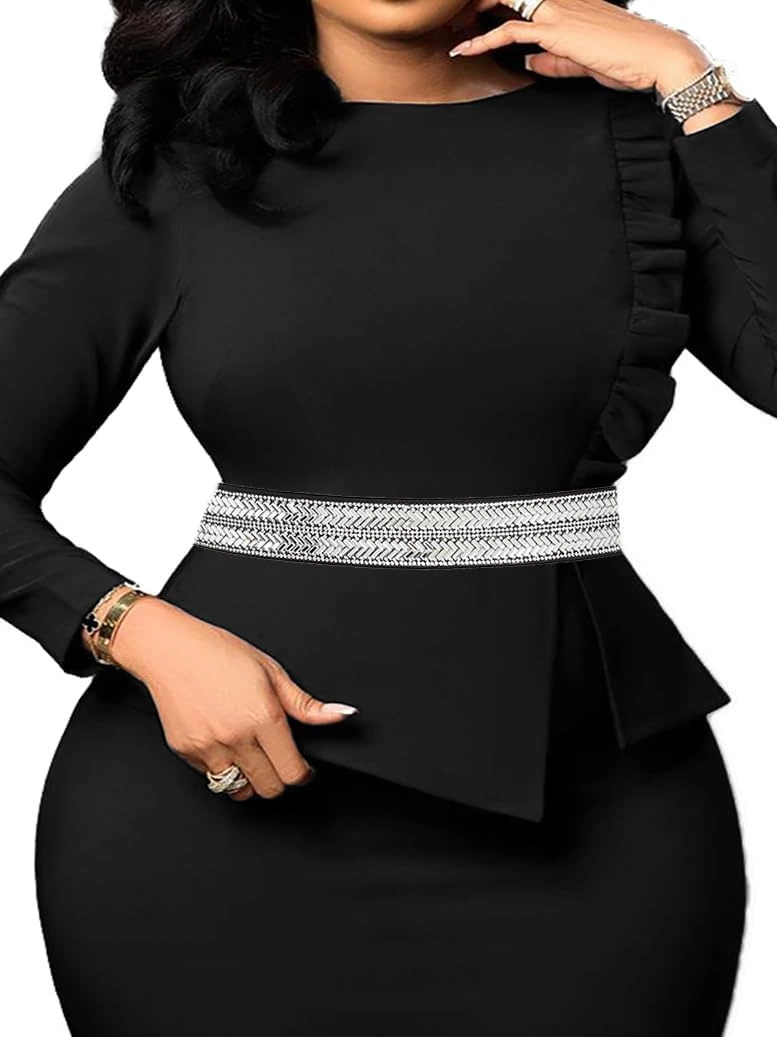
A stretch belt offers a different visual effect on a relaxed dress or long shirt. Compare the band’s width with the amount of fabric around it. A broad band can be deliberately prominent; a narrower option may leave more of the garment visible. Neither is inherently more flattering: look for the balance you prefer.
Check the front and back views before choosing. Some designs place their rhinestones at the front while the back uses a different material. That can be perfectly suitable, but it should match your expectations, especially if your outfit will be photographed from several angles. The full gallery is more useful here than a single cropped promotional image.
Finish the outfit with shoes and outerwear before deciding. A jacket hem can cover the belt or meet it at an awkward point. Try the jacket open and closed. If you expect to remove it during the event, make sure you like both versions rather than styling only the arrival photograph.
8. Coordinate the finish without matching everything
Use one connection between the belt and the rest of the outfit. That might be a metal-tone finish, a curved motif or the repetition of a bow. You do not need all three. A few related details can make an outfit feel considered while leaving room for pieces you already own.
When mixing finishes, make the difference look deliberate. For instance, repeating one finish in two places can create a visual link while another piece remains a contrast. Take the suggestion as an experiment, not a formula that guarantees a result. The size, brightness and position of the pieces matter as much as the color name.
Remember that silver or gold in a fashion accessory’s color description does not establish precious-metal content. Choose the appearance you like, then read the material information for the exact option. For a fuller approach to necklaces, earrings and headpieces, continue with choosing occasion accessories.
9. Solve common styling problems
| What you notice | What to try |
|---|---|
| Fabric bunches above the belt | Redistribute the fabric, change the tuck or try a different placement before tightening. |
| The hanging end feels distracting | Check the intended fastening and drape; consider a style with a different length or arrangement. |
| Several details compete | Keep the belt, simplify one nearby accessory, then photograph the outfit again. |
| The belt catches on the garment | Stop the trial, inspect the contact points and try a different fabric or construction. |
| It feels fine standing but restrictive seated | Recheck the fit range and placement. Do not rely on a standing measurement alone. |
A style mismatch and a fit problem need different solutions. Changing earrings can quiet a busy outfit; it cannot fix a belt that is too tight. Likewise, a different size will not necessarily change a motif you dislike. Identify the actual problem before ordering another option, and use the product’s full measurements rather than guessing from the model.
10. Finish with a simple care routine
Remove the belt before laundering the garment unless the exact instructions explicitly say otherwise. Keep its care guidance separate from the dress label: metal components, decorative stones and textile sections may have different requirements. Avoid assuming that a method intended for fine jewelry is suitable for every fashion belt.
“When traveling, protect your jewelry pieces from scratches or other impact damage by padding it in a separate box or case.”
GIA, Tips on Caring for Jewelry
GIA’s advice above concerns jewelry; the useful packing principle here is to keep decorative pieces protected and separated. It is not a cleaning prescription for an Abien belt. Follow the selected item’s instructions, avoid forcing a chain into a knot, and keep fastenings away from delicate clothing in your bag. See our accessory care guide for general precautions.
11. Questions to settle before you choose
Can a rhinestone belt work for a daytime outfit?
Yes, if you like the combination. Start with everyday pieces and decide how much contrast you want. A small line of shine can be an accent; a wide or strongly decorated belt can be the main feature. The setting and your comfort matter more than an arbitrary rule that sparkle belongs only after dark.
Should the belt match my shoes?
It can, but it does not have to. Compare the full outfit rather than two items in isolation. A finish shared with jewelry, a repeated color in a bag, or a simple neutral shoe can each make sense. Try one version at a time so you can see which change actually improves the combination.
Can I buy one belt for dresses and jeans?
Possibly, but compare both wearing positions, the garment thickness and the belt-loop width. The size that works at your waist over a thin dress may not work lower down through jeans. Do not assume adjustability solves every difference; check the usable range and how the decorative portion sits in both outfits.
What should I check on the product page?
Confirm the selected color and size, dimensions, fastening, front and back views, material details and included pieces. Read the dated price information, then confirm current terms before purchasing. If a required measurement is missing, use the route in product and order help rather than inferring it from a photograph.
12. Your final outfit check
Put the complete outfit on once more. Look at the front, side and back; sit down; take a few steps; and carry the bag you plan to use. Check whether the belt stays where you want it without repeated adjustment. Keep the combination that feels right in these ordinary moments, not only the one that looks striking in a tightly cropped picture.
Then save a photograph for next time. You have created a useful outfit reference rather than a one-off decision. Browse western-inspired belts if you want a different direction for denim, or explore our guide to bringing a party look together when the accessory is part of a larger celebration plan.